Recycling rules drive growth in Latin America
New recycling and extended producer responsibility rules in Chile, Colombia and Brazil are increasing demand for recycled plastics. Recupac’s LDPE facility in Chile illustrates how process control and technology partnerships support pellet quality.
New recycling regulations in Chile, Colombia and Brazil are changing the economics of the plastics industry in Latin America by introducing mandatory recycling and extended producer responsibility targets. In Chile, Recupac, part of the Coipsa Group, is presented as an example of how advanced technology, process control and strategic partnerships can convert post-consumer plastic waste into recycled raw materials suitable for industrial use. The regional transformation is being driven by a growing number of legal requirements obliging manufacturers and importers to return the plastic they place on the market back into the production cycle. In October 2025, Brazil enacted Decree No. 12,688/2025, regulating the reverse logistics of plastic packaging and setting two targets: a recovery rate for collection and proper treatment of plastic packaging, and a recycled content index requiring a minimum recycled content of 22% from 2026, with fines of up to BRL 50 million for non-compliance.
Brazil is following regulatory paths already introduced by neighbouring countries. Chile has enforced the REP Law, Law No. 20,920, since 2016, with a target of 32% plastic recovery by 2026. Colombia adopted Law 2232 in 2022, requiring PET bottles to contain at least 50% recycled content, increasing to 90% by 2030. According to the information provided, the regional trend is towards more ambitious recycling targets and legally driven demand for recycled materials, creating opportunities for companies such as Recupac and technology partners including Lindner Washtech.
From waste management to recycled material
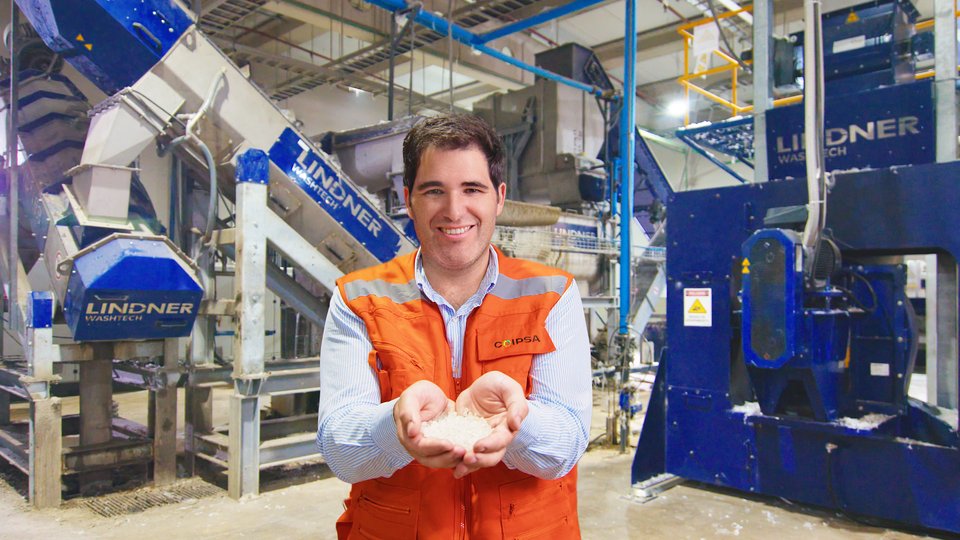
Recupac, the waste management division of the Coipsa Group, has been active in Chile’s circular economy for more than 35 years. The company serves approximately 500 customers and manages more than 150,000 tonnes of waste annually. Its latest milestone is an LDPE recycling facility in San Bernardo, with a production capacity of 500 tonnes per month. Recycled pellets from the facility already replace approximately 40% of the virgin resin used in new plastic film production.
"At Recupac, we play a well-defined role within Chile's circular economy by helping our customers become more competitive through integrated waste management focused on maximizing material value with full traceability and a circular approach," explains Macarena Hadad, Business Development Deputy Manager at Recupac. According to her, the LDPE project was developed after the company recognised that simply managing this material was no longer sufficient. "We saw an opportunity to go one step further by transforming it into a new recycled raw material capable of re-entering manufacturing processes."
Process control as a basis for pellet quality
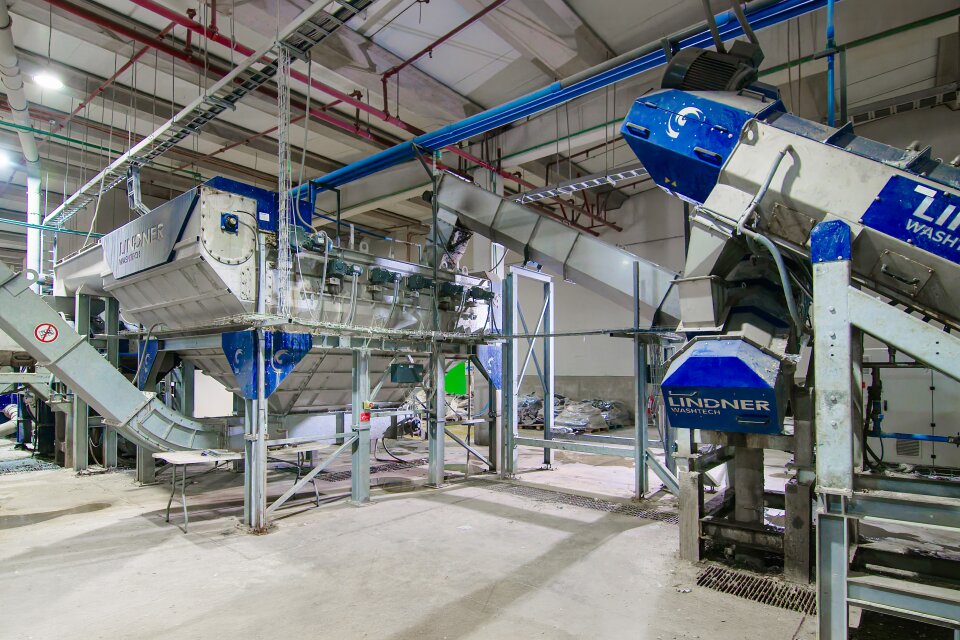
Transforming post-consumer plastics into consistent recycled pellets requires control at each processing stage. These materials are heterogeneous, often contaminated and come from variable sources. Recupac’s process covers collection directly from customers, sorting and baling, secondary quality inspection and the recycling line itself, including shredding, washing, drying and extrusion.
"The key is understanding that quality does not depend on a single processing step, but on the entire integrated process. Quality is built step by step through proper pre-sorting, efficient cleaning, process stability and close control of operating parameters at every stage. And Lindner enables us to operate a highly efficient and stable washing process, which is essential when processing post-consumer materials, where contamination and variability are inherent challenges," says Eugenio Bascuñan, Industrial Manager at Recupac.
The washing stage produces a clean and homogeneous material stream that is integrated with the downstream Erema extrusion line. Erema is described as Lindner’s long-standing technology partner in plastics recycling. "The quality of the final pellet depends on how well both processes work together. It is not simply about achieving excellent washing or extrusion individually, but about maintaining a fully integrated, continuous and controlled process from start to finish using state-of-the-art technology," Bascuñan summarises.
According to Recupac, the results are visible in product consistency and operational reliability. "The implementation of this recycling line has represented a significant step forward. Today, we operate a far more stable process with higher cleaning efficiency, more consistent pellet quality and greater operational efficiency," says Bascuñan, adding that these improvements provide greater confidence in meeting increasingly demanding requirements from customers and industrial applications.
Lindner expands its presence in Latin America
Both Recupac executives underline the importance of cooperation with Lindner throughout the project. "Local support has been essential. I would describe our collaboration with Lindner as one built on mutual cooperation and continuous support."
The Recupac project is presented as part of a broader strategic direction at Lindner and Lindner Washtech, which specialises in plastics washing technologies and is expanding its portfolio of solutions in response to increasing quality requirements for recycled plastics.
To support growth in the region, Lindner established a subsidiary in 2025, headquartered in São Paulo, Brazil, under the leadership of Frederico Hartmann. The subsidiary is intended to strengthen Lindner’s regional presence by providing local technical support, project development and commercial assistance. As the circular economy develops and regulations increasingly promote the use of recycled content in Latin America, Lindner declares its commitment to acting as a strategic partner for the region’s recycling industry.