Streamlined process and high quality improve sustainability of PET products
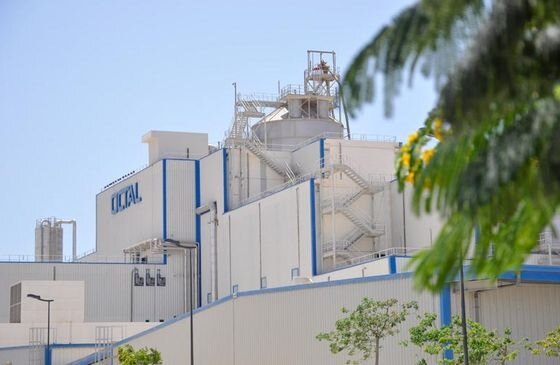
Over the past five years, PET resin and sheet producer Octal's commitment to sustainability has proven to directly correspond to dramatic growth.
Some of those initiatives include making sustainability part of the company's core strategic imperatives, saving energy through substantial financial investment in the best technologies available, lowering overall water consumption, and conducting business from a strategic location.
“Sustainability is part of our company's DNA,” says Nicholas Barakat, managing director, Octal. “Sustainability is understood as a fundamental to the future of Octal's business. This total integration of sustainability into the business model helps fuel growth and promote PET as the leading clear rigid packaging material.”
Established in 2006, this philosophy led Octal to invest in the newest technologies available in the marketplace. While at first it might have seemed risky, the decision to incorporate leading-edge technology has proven to be beneficial both in terms of conserving energy and achieving an excellent return-on-investment.
For example, conventional PET manufacturing depends on as many as five energy-intensive stages. Octal’s process uses the 2R system to efficiently produce quality PET resin using only two reactors. In doing so, Octal’s manufacturing process requires substantially less energy than conventional PET production.
Octal has removed the resin drying and pellet extrusion stages – the two most energy-intensive steps in sheet production – to eliminate the need for 67 percent of the electricity otherwise required to produce its DPET sheet. Says Barakat, “This dramatically lowers use of electricity and also reduces our total DPET carbon footprint compared to other sheet products – a reduction so important that it is driving packaging manufactures to make the switch to our product from PVC, OPS and even rPET.”
Additionally, through proprietary process control software and hardware, Octal delivers high roll-to-roll uniformity and typical caliper variation of approximately 1 percent. This enables thermoformers to downgauge, using less overall material in the final tray.
Barakat notes that this is a significant achievement in that industry standard gauge variation is around 5 percent, and coupled with the additional benefit of better flow into the corners and fine features of a thermoformed tray, savings of 8 percent to 15 percent can be achieved.
“The benefits of such consistency and quality are passed along to our customers,” says Barakat. “In turn, they have gained additional customers by being empowered to reduce their costs. They are now able to order thinner gauge sheet while knowing exactly how much packaging they can manufacture from the material they buy.”
Octal’s sustainability efforts involved finding ways to use water as sparingly as possible. For the production process of Octal. DPET, only recycled water is used and is delivered by a specially built pipeline bringing wastewater from the local municipal waterworks. By recycling this water using reverse osmosis technology in tandem with sand filtration, 80 percent of the water can be used in the manufacturing process. Any extra water is used to irrigate the greenbelt around the factory.
Octal has been able to reduce its transportation carbon footprint as well.
“When scouting for a location for our plant, we began with a true global view of transportation costs, and, as a consequence, ultimately decided to position our plant only a few hundred meters from the Port of Salalah, a world-class transshipment hub catering to the world’s leading shipping lines,” Bakakat says.
“This allowed us to service the supply needs of manufacturing customers with locations worldwide. The strategic location has proven to be a competitive advantage with cost savings opportunities for customers – plus, the streamlining of shipping requirements contributes to a reduction of the company's total carbon footprint.”
Barakat adds, “Please keep in mind, just telling our customers that we offer a smaller carbon footprint than our competitors was far from being enough to convince major manufacturers to make the switch to our company. We had to prove Octal's carbon footprint through third-party testing.”
In early 2011, Intertek Expert Services, an internationally recognized, independent testing service, generated a carbon footprint of Octal DPET sheet and compared the results to other leading alternative plastics. The study considered all emissions related to the production of resin and DPET sheet at Octal’s Salalah facility in Oman, and established a carbon footprint characterizing the delivery of Octal resin and DPET sheet to the United States.
“In summary,” Barakat says, “our sustainability initiatives have driven OCTAL revenue for the fiscal year 2010-2011 to rise to US$464 million compared to $330 million in 2009-2010. During Interpack 2011, our booth was crowded with major manufactures looking for alternative, higher performing materials, a very real indication that sustainability is so much more than a buzzword – it is a way of preparing for a successful future.”