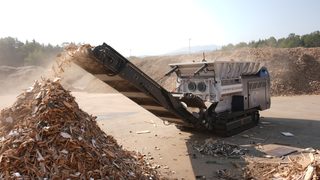
Lindner introduces Urraco ECO mobile shredder
Lindner has expanded its mobile twin-shaft shredder range with the Urraco ECO. The machine is intended for pre-shredding and volume reduction of waste wood, green waste and commercial waste.
News Plastech
Lindner has expanded its mobile twin-shaft shredder range with the Urraco ECO. The machine is intended for pre-shredding and volume reduction of waste wood, green waste and commercial waste.
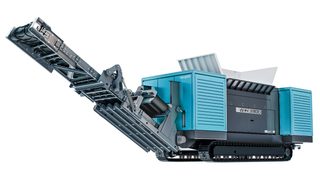
Vecoplan AG is launching a new version of the VEZ 3300 single-shaft shredder, which will be available in both stationary and mobile variants. The machine has been designed for flexible processing of alternative fuels, waste, used wood and biomass.

Siemens Smart Infrastructure introduced Sirius 3RQ4 coupling relays with housings made from Akulon K225-KS B-MB, a PA6 grade from Envalior containing 70 percent bio-based content sourced from used cooking oil via mass balance. The series offers three variants and meets Siemens EcoTech criteria.

A 25-partner consortium led by the University of Torino has launched Oliwa to repurpose olive by-products into co-products for animal feeds, functional ingredients, packaging and biogas. Aimplas will assess extrusion processability and validate rigid packaging and lidding film prototypes based on olive waste.

The Padua-based company is consistently experiencing positive outcomes from its strategic initiatives aimed at reducing environmental impact.

With Brewnomic, the Freising team has set the industry standard for some time in order to make the brewing process energy self-sufficient and CO2 neutral and offers various concepts for energy recovery, residue recycling or process water saving.

ACI’s 9th European Biopolymer Summit will be taking place in London, UK, on 8th - 9th February 2023.

Waste2Func builds platform to collect food waste from agriculture, food industry, supermarkets, auctions and restaurants to convert it into bioplastics and biosurfactants
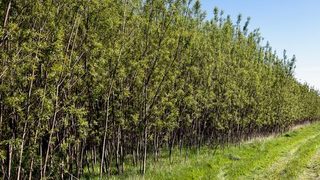
Local farmers’ ability to sell biomass to Iggesund Paperboard’s paperboard mill at Workington will return over 1.5 million pounds annually to the local agricultural industry.

Yesterday it announced that PepsiCo, Inc. has joined the Alliance to advance the shared goal of creating beverage containers with a significantly reduced carbon footprint.
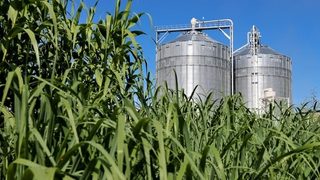
It is hard to imagine today how our food will be produced in just a few decades. More efficient, low carbon footprint, healthy, tasty and often grown around the corner. Let's take a look into the future.

The EU-funded INCOM project has used cellulosic nanofiber to reinforce composite sandwich structures, thus reducing their weight and increasing their sustainability.

The BRIGIT project has produced new tailor-made biopolymers produced from lignocellulosic sugar waste for highly-demanding fire-resistant applications

EU and industry partners launch €3.7 billion investments in the renewable bio-based economy.

The nova-Institute has presented the EU project BIOCORE, one of the three large bio-refinery projects that are being funded as part of the European Commission’s 7th Framework Programme. The idea is to make particularly efficient use of biomass, such as straw or wood to produce chemicals and plastics.