The dirtier the better
Sophisticated recycling provides competitive edge.
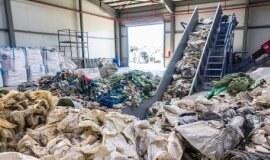
Interview with Heiko Weber, Head of Project Management at Herbold Meckesheim GmbH. Based in Meckesheim near Heidelberg, the firm makes plant and machinery for the recycling of plastics and the size reduction of production waste.
Mr Weber, does Herbold Meckesheim gain when raw material prices rise all over the world?
If raw materials become scarce or expensive, there is increased demand for recycling technologies and hence for our plant and machinery too. At such times, people also consider reprocessing products that used to be thrown away. Waste raw materials, such as trimmings from plastic film production or runner loss from injection moulding, are quite easy to recycle. If the materials are heavily soiled, it is more difficult. Then the effort and expense required for recycling are much greater. But that is where we see greater business opportunities. A lot of firms can do basic recycling, and there is keen competition from Asia in particular. But not many have mastered sophisticated recycling as well as we have.
How much more expensive do raw materials have to become?
The difference between the costs of raw materials and recycled material has to be large enough to create demand for sophisticated and expensive recycling technologies. For example, a tonne of film made from new materials costs between 1,200 and 2,000 euro. You have to pay between 180 and 250 euro for a tonne of reprocessed film.
In what fields is the reprocessing of soiled waste particularly worthwhile?
Films for agricultural use represent a growth sector, for covering large areas such as fields or silage. One need only think of the enormous areas of film used to cover fields of asparagus. These films are heavily soiled by loam, plant residues and manure. This dirt clings to the film and after a while it is hard to wash off. Asparagus films are generally rolled up and reused once or twice. But then they are so badly damaged that they have to be changed.
What do your machines do with the soiled film?
There are several stages to the process. First there is coarse grinding, then several washings. Finally, the material is separated by centrifugal force in a hydrocyclone and then thickened in an agglomerator so that a free flowing granulate comes out at the end.
Can raw material be replaced by 100 per cent recyclate?
It depends on the quality required. But basically thirty to fifty per cent of the raw material can be replaced by recyclate even with respect to the highest quality requirements. For less demanding applications, even one hundred per cent regranulate can be used.
Apart from agriculture, where does Herbold Meckesheim see growth potential?
In the post-consumer sector, that is in household waste. Unlike agriculture, however, this involves a great variety of different materials that are often contaminated with unknown substances. This means that they cost more to reprocess and the margins are smaller as a result. All the same, demand is growing here too. The public in many countries of the world is increasingly calling for a clean environment. We are not the only country where people are concerned about the islands of rubbish floating on the high seas.
In Germany we have the Dual System waste collection. Households sort their own waste. Is that not preferable to sending it for recycling unsorted and dirty?
There is no question that the German system is a good one. But it is also very complex. Countries that are now jumping on to the recycling bandwagon would prefer to avoid the complex German system that is also very cost-intensive. What they are looking for is efficient sorting plants.
If there were enough of everything, would we have the concept of sustainability at all?
The public now has an increased environmental awareness and sees sustainability as absolutely essential. But even if there were enough of everything, we would still have to do something with our waste. That can no longer simply be ignored.
Herbold Meckesheim is a medium-sized firm. What part does sustainability play for you?
It is essential for medium-sized firms to go for sustainability. If I may give you just one example: If we invest in training it is of course in our best interests for our trainees to stay with us as long as possible. They learn the basics of their profession, but also the special skills we need for our business. In the space of a few years they become highly skilled members of staff. We would not find people like that on the open market. Medium-sized firms like ours cannot afford to think about resources in the same way as large concerns. They take on maybe ten per cent of any intake of trainees. The selection process starts during training itself. But we have to rely on getting the right people from the start and make sure they stay with us.
So do you get the right people?
We have the good fortune that the young see the recycling business in a very good light. Many young people today are very environmentally aware. That is to our advantage and we have no problems in getting good recruits for our apprenticeships.
Herbold Meckesheim specialises in reprocessing waste from the plastics converting industry. It has a workforce of 120 and sales of around 25 million euro. All its plant and machinery are made in Meckesheim. Apart from Germany and Europe, it also has major markets in North America, North Africa and the Middle and Far East.