Training unlocks savings from digital injection moulding
sinit reports annual savings of €87,500 after training employees to use ENGEL digital assistance systems. The company also halved its complaint rate and reduced start-up rejects by around one third.
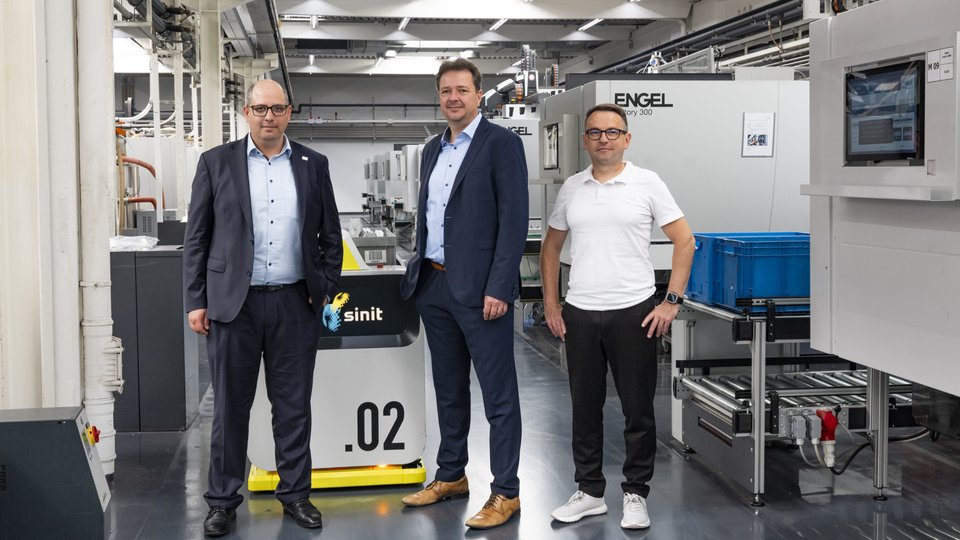
Digital assistance systems were already installed at sinit's injection moulding facility in Rödental, but operators' uncertainty meant that they were not being used in production. Following ENGEL's iQ.boost training, the company integrated the tools into day-to-day operations, halved its complaint rate and reduced start-up rejects by around one third. sinit estimates annual savings of €50,000 from iQ weight control across 20 machines and a further €37,500 from shopfloor monitoring.
The facility manufactures more than 1,200 active products for markets including electrical engineering, automotive, aerospace and household goods. It processes materials containing up to 60 per cent glass fibre, including grades with flame-retardant additives and high-performance polymers for safety-critical applications. Production is based on 20 tie-bar-less ENGEL victory injection moulding machines with clamping forces from 500 to 3,000 kN. The cells incorporate viper linear robots and the iQ weight control, iQ clamp control and iQ flow control assistance systems, with connections to a central shopfloor monitoring system.
sinit is part of Wöhner Industries Holding and handles the group's plastics activities. "We are the strategic plastics unit, covering everything from advice on designing assemblies for plastics and mouldmaking through to the production and assembly of complete components," says Alessandro Sattler, Director Technical Operations at sinit. Electrical engineering is the site's main and highly volatile market, requiring rapid availability and demanding quality standards. "Ultimately, every market demands the same things: highly efficient production, high quality standards and, above all, availability," Sattler adds.
Material wear and machine configuration
The combination of high glass-fibre content and flame-retardant additives creates particular wear challenges. "Flame-retardant materials in particular are corrosive. Once the protective coating is compromised, wear progresses very quickly when glass fibre is also involved," explains Mike Stößel, Head of Plastics Production at the Rödental site. The plasticising screws previously achieved a service life of only 18 months.
sinit and ENGEL worked over an extended period on alternative wear-protection concepts. "We opted for a different configuration and are now significantly exceeding the previous service life," Stößel says. The company also uses a computed tomography scanner in its quality laboratory to analyse material structures and inspect mechanical assemblies, reducing the time required to identify the causes of malfunctions.
The facility operates exclusively with ENGEL injection moulding machines. According to Stößel, using equipment from one manufacturer means operators do not need to switch between control systems, which reduces training time amid normal staff turnover and a shortage of skilled workers. Each production cell has a viper linear robot fully integrated into the machine control unit, providing one operating system, data backup and user interface.
The tie-bar-less victory design also supports frequent product and mould changes. It provides access to the full width of the mounting platens and can allow production on machines with lower clamping force. The design is also relevant to the low ceiling height at the Rödental facility, where it enables changes of large moulds that would otherwise be difficult to perform.
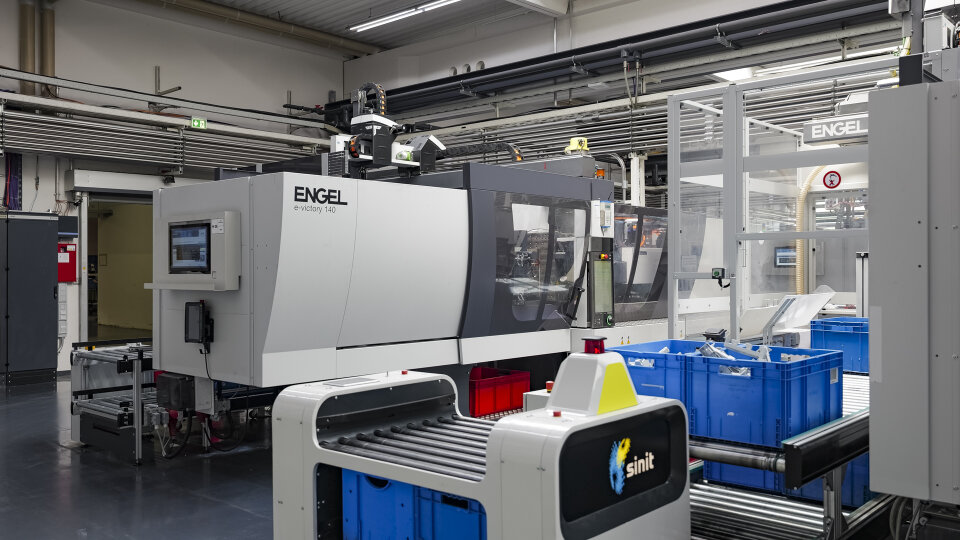
Manufacturing electrical components on an e-victory 140
Assistance systems reduce energy use and rejects
An internal comparison between an operator and iQ clamp control showed that the system determined the optimum clamping force more quickly and accurately. On average, the automatically calculated settings required 3 per cent less energy than manually determined values. Lower clamping force also improved mould venting and reduced scrap. This is particularly relevant for flame-retardant materials that release substantial quantities of gas, as venting through the mould parting line can improve part quality.
"With iQ clamp control, the result does not depend on the individual operator, I get the same outcome every time," Stößel says. The system therefore contributes to repeatability as well as energy efficiency and venting.
iQ weight control compensates for viscosity fluctuations within the same shot. These variations can result from batch differences, drying levels, temperature changes or draughts. "The more stable processes have reduced our start-up rejects by around one third," Sattler says. Depending on the product, mould and material, sinit calculates annual savings of approximately €2,500 for each machine equipped with the system. Across 20 machines, the total is €50,000 per year. The company now orders the licence with new machines whenever the application requires it.
"We want our processes to be as reliable as possible and to enable unmanned production wherever feasible," Stößel explains.
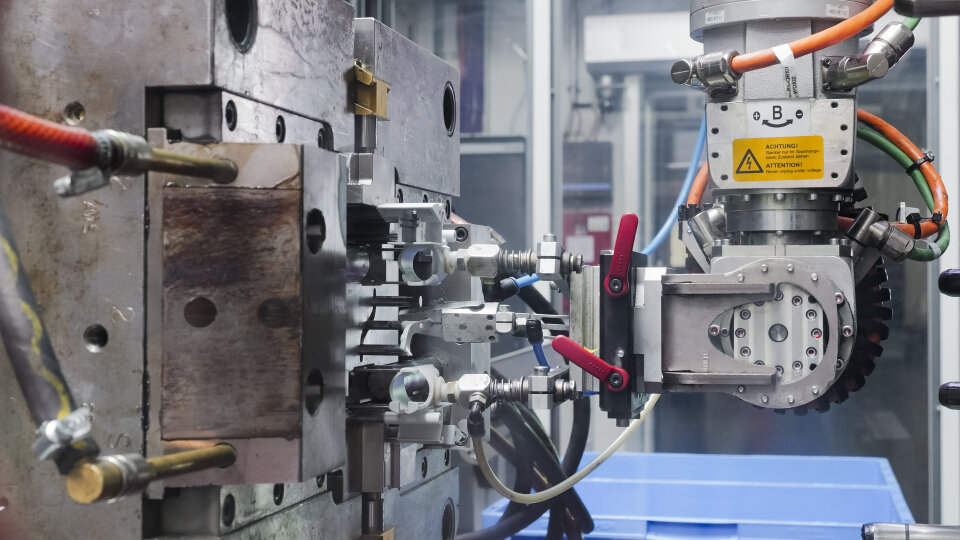
Manufacturing a fuse holder at sinit
Practical training closes the implementation gap
Although sinit had invested in the assistance systems, employees were reluctant to activate them because they lacked confidence and were concerned about making mistakes. "There is nothing worse than having high-tech equipment and being able to use only a fraction of its capabilities because people do not know how to apply it safely and effectively," Stößel says.
ENGEL's two-day iQ.boost programme is intended for setters, machine operators and sampling personnel. It combines process theory with guided commissioning and documented trials using production parts. sinit first sent employees to conventional seminars at the ENGEL training centre and then organised three iQ.boost courses at its own plant, each with no more than five participants.
"The key difference was that the training took place on our premises. We started on the virtual machine, followed by a day and a half of practical trials using our own products. That gave everyone the opportunity to try it for themselves," Stößel explains. After each course, sinit received a report documenting measurable process improvements.
The systems are now being used in production, and employees have greater confidence in selecting the appropriate tool for a given process situation. "We are seeing far greater confidence in their use, and the functionality we already had is now genuinely being utilised because employees understand how it works and what it does," Sattler says. The company associates this change with a 50 per cent reduction in its complaint rate and intends to continue investing in training.
Real-time monitoring saves 750 hours annually
ENGEL shopfloor monitoring gives production management access to real-time information about downtime, overall equipment effectiveness and quality rates. The data is available regardless of time or location and provides a common information base for production management, planning and shift supervisors.
sinit estimates that eliminating manual data recording, follow-up queries and movement between departments saves three hours per day. Based on 250 working days, this equals approximately 750 hours annually. At an assumed labour cost of €50 per hour, the calculated economic benefit is around €37,500 per year.
Service support is provided from ENGEL's Nuremberg site, with response times generally below 24 hours. Stößel cites a case in which a failed valve would normally not have been available until the following Tuesday. A service technician instead removed a valve from a machine at the Nuremberg technical centre, enabling installation the next morning and avoiding five days of lost production capacity.
For sinit, the results indicate that installing digital assistance systems is only the initial stage of implementation. Their operational and financial effects depend on employees having sufficient process knowledge and confidence to use them. The combined calculated benefit of iQ weight control and shopfloor monitoring is €87,500 per year, alongside fewer start-up rejects, a lower complaint rate and more consistent process decisions.
