ETERNAL advances sustainable pharmaceutical production
The four-year ETERNAL project has developed technologies and methods to reduce the environmental impact of medicines across their life cycle. Seven case studies covered continuous manufacturing, green chemistry, biotechnology, resource recovery and digital tools.
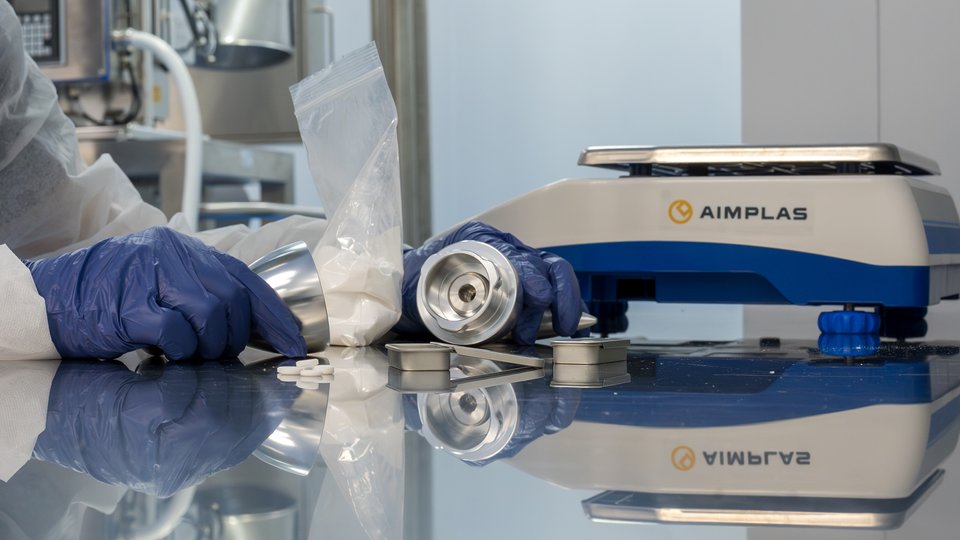
The European ETERNAL project has concluded after four years of research into reducing the environmental impact of medicines throughout their life cycle. Coordinated by AIMPLAS, the Plastics Technology Centre, and funded by the Horizon Europe programme, the initiative brought together 16 European organisations representing the pharmaceutical value chain. The consortium examined impacts associated with the design, manufacture, use and disposal of pharmaceutical products, and developed solutions intended to reduce resource, energy and chemical consumption as well as waste generation.
Medicines are essential to human health, but their production and use can consume substantial quantities of resources and generate waste that may affect ecosystems. ETERNAL addressed these issues through pharmaceutical life cycle thinking and innovations intended to improve the sustainability of the European pharmaceutical sector. Seven industrial case studies covered different stages of the value chain, combining continuous manufacturing, green chemistry, resource recovery, biotechnology, digitalisation and methods for including sustainability criteria in industrial decisions.
Continuous manufacturing and solvent reuse
In cooperation with Angelini Pharma, the project assessed twin-screw extrusion as a means of simplifying pharmaceutical production, eliminating energy-intensive stages and reducing water consumption. Together with Laboratorio Reig Jofre, the consortium also developed continuous processes for manufacturing nanoparticles and liposomes for drug delivery applications.
Digital tools incorporated into these processes were designed to predict final product characteristics. The work also examined the reuse of solvents employed during manufacturing, linking process optimisation with lower material demand and waste generation.
Green chemistry and resource recovery
AstraZeneca led two case studies involving membrane-based separation technologies. The first investigated the replacement of conventional solvent swap operations, which require substantial energy input. The second focused on recovering and reusing catalysts employed in pharmaceutical synthesis. In this case, 98% of the product was recovered, while the catalyst was successfully reused over multiple production cycles. This reduced both waste generation and demand for fresh raw materials.
Biotechnological approaches were also examined to reduce the environmental impact of active pharmaceutical ingredient production. Researchers at Saarland University used genetic engineering to modify microorganisms employed in industrial fermentation. The work reduced unwanted by-products and simplified downstream purification stages.
MyBiotech developed a continuous process for producing and purifying rapamycin, an immunosuppressant drug. The process used solvents from renewable sources and real-time monitoring systems to improve process efficiency.
Environmental assessment and industrial decisions
Britest developed a methodology to support the evaluation of technology options based on technical, economic, environmental and social factors. It is intended for use even at early stages of innovation, when the available information may be limited.
The project also expanded knowledge of the behaviour of pharmaceuticals in the environment. Universidade de Aveiro and the UK Centre for Ecology & Hydrology investigated the occurrence, fate and environmental effects of active pharmaceutical ingredients and their metabolites. The generated data are intended to improve environmental risk assessment and support future evidence-based regulatory decisions.
Contribution to the European Green Pharma agenda
In 2024, ETERNAL joined ENVIROMED, IMPACTIVE, SusPharma and TransPharm to establish an informal Green Pharma Cluster. Its purpose was to create scientific synergies and increase the impact of research funded by the European Union.
The five projects jointly prepared the policy brief "Towards a Green Pharmaceutical Future in Europe". The document recommends integrating environmental criteria throughout the life cycle of medicines and proposes measures supporting innovation, competitiveness and sustainability in the European pharmaceutical industry.
According to the project results, combining continuous manufacturing, digitalisation, green chemistry, resource recovery and sustainable-by-design approaches can reduce the environmental impact of medicines without compromising their quality, safety or efficacy. The work is expected to provide a basis for further technological development and policies supporting the pharmaceutical sector's sustainability transition.
The ETERNAL project received funding from the European Union's Horizon Europe Framework Programme under Grant Agreement No. 101057668.
ETERNAL project partners
The consortium comprised 16 European organisations:
- AIMPLAS, Spain
- IRIS Technology Solutions, Spain
- MyBiotech GmbH, Germany
- Enviroeye Engineering Ltd, Ireland
- Universität für Bodenkultur Wien, BOKU, Austria
- Angelini Pharma, ACRAF S.p.A., Italy
- Universidade de Aveiro, Portugal
- Laboratorio Reig Jofre, Spain
- Asphalion, Spain
- Spanish Association for Standardization, UNE, Spain
- ICP Innovation Pathways / Inlecom Commercial Pathways, Ireland
- Universität des Saarlandes, Germany
- AstraZeneca UK Limited, United Kingdom
- Britest Limited, United Kingdom
- Arcinova Ltd, United Kingdom
- UK Centre for Ecology & Hydrology, UKCEH, United Kingdom