Key demands of the chemical industry at the 6th Techco Forum in Warsaw
At the 6th Techco Forum in Warsaw, representatives of the chemical industry and public administration highlighted the need for coherent regulation, predictable investment conditions and protection of the competitiveness of the European industry in the context of the energy and climate transition.
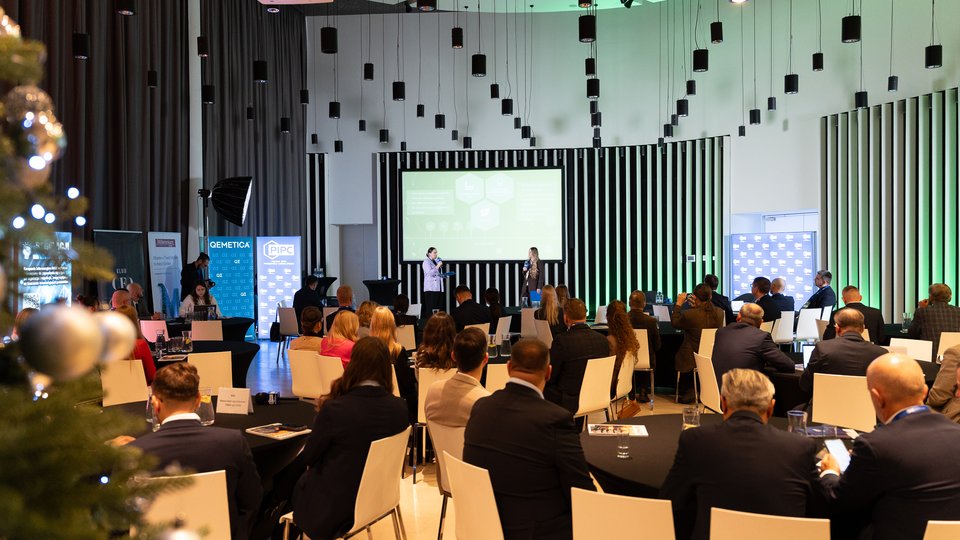
The 6th Techco Forum, organised by the Polish Chamber of the Chemical Industry, focused participants’ attention on the implications of current and proposed EU regulations for the competitiveness of the European chemical sector. The discussions centred on energy costs, stability of the investment environment, regulatory risk and protection of the EU market against imports from regions with lower environmental standards. Participants also discussed practical challenges related to the implementation of the Fit for 55 package, the EU ETS and CBAM, the new EUDR Regulation, planned simplifications under the REACH revision and Omnibus packages, as well as the role of CCUS technologies and the circular economy. Many speakers emphasised the gap between the scale and pace of regulatory change and the real investment capacities of chemical companies, including plastics producers and converters, which operate under growing cost and competitive pressure.
Competitiveness under regulatory pressure
The meeting opened with an expert briefing, “Regulations, packages, plans – what do they mean for the industry’s competitiveness?”, led by Klaudia Kleps, Director of the Advocacy and Legislation Division, and Aleksandra Sutryk, Senior Regulatory Specialist at the Polish Chamber of the Chemical Industry. The latest initiatives of the European Commission were presented, from the Draghi report described as a “wake-up call” for Europe, through the Competitiveness Compass, the Affordable Energy Plan and the SME Omnibus, to the Action Plan for the European Chemical Industry and the Chemicals Omnibus package. These documents formally recognise the chemical industry as a strategic sector, crucial for the development of green technologies and the maintenance of supply chains.
The experts, however, pointed to a lack of operational solutions, including the absence of decisions on the reform of the EU ETS and the strengthening of CBAM, which could translate into improved operating conditions for companies. They stressed the need to reduce energy costs, ensure a stable and predictable investment environment, limit regulatory risk, effectively protect the EU market against imports and strengthen strategic autonomy. These demands had previously been compiled in the “Manifesto of Polish Chemistry”, published by PCCiP in 2024.
This was followed by a discussion, “From plans and strategies to actions – does industrial policy support the competitiveness of chemistry?”, with the participation of Paweł Bieniasz, Head of Strategy, Soda Business Unit at Qemetica, Damian Fogiel, Director of the International Regulations Office at Orlen, and Maciej Przymanowski, Transformation Expert at the Transformation and Decarbonisation Office of Gdańsk Refinery. The moderator was Aleksandra Sutryk. Participants emphasised the lack of concrete measures in EU initiatives on competitiveness and industrial transformation and pointed to the instability of the EU ETS system and growing import pressure from markets with lower standards. They highlighted the need to clarify instruments such as CCA, CISAF and the Innovation Fund, and to secure financing for decarbonisation technologies, including CCS and hydrogen projects. It was noted that current hydrogen targets are oversized, and that restrictive definitions and the favouring of selected solutions undermine the principle of technological neutrality.
EUDR and the circular economy
After the break, Dr Sergiusz Urban, Partner at WKB Lawyers, discussed the EU Regulation on deforestation-free products (EUDR). He pointed out that this is one of the EU’s key environmental regulations, as it obliges companies to ensure full traceability of the origin of commodities at risk of causing deforestation. Companies placing such products on the EU market or exporting them will have to implement due diligence procedures including risk analysis, collection of detailed data, including geolocation of production plots, and submission of statements in the TRACES system. The high sanctions provided for in the Regulation make its implementation strategic for entire supply chains. Urban recalled that the obligations will start to apply to large and medium-sized enterprises at the end of 2025 and to SMEs in mid-2026, while discussions on possible deadline extensions and simplifications are underway in the EU.
In the next part of the agenda, Klaudia Kleps chaired the panel “Raw materials, waste, regulations, competitiveness – chemicals in the circular economy”, with the participation of Dr Eng. Daria Frączak from Łukasiewicz – Institute of Heavy Organic Synthesis "Blachownia", Grzegorz Semerjak from Orlen Południe, Sebastian Szuba, CEO of Hig Polska, Dr Sergiusz Urban from WKB Lawyers and Dr Eng. Anna Zalewska from Basf Polska. Panellists indicated that the biggest challenge to the development of the circular economy is regulatory uncertainty and inconsistency at both EU and national levels. Attention was drawn to chaotic regulatory changes, the lack of clear implementation guidelines, overlapping provisions and the lack of complementarity between horizontal and sectoral policies.
Delays were also noted in the implementation of key instruments such as extended producer responsibility and the deposit-return system. The chemical industry stressed the need for technological neutrality and for creating conditions for the development of mechanical, organic and chemical recycling. Chemical recycling is currently struggling with the absence of a legal definition, administrative barriers and difficulties in obtaining financing. From an innovation perspective, the scale-up phase is particularly challenging, with costly pilot processes and a limited appetite for investment risk slowing down implementation. At the same time, the growing potential of biofuels, oil recovery and new materials better suited to recycling was highlighted. Panellists emphasised the importance of educating public administration and consumers and the need for stable regulatory and financial frameworks to support the development of the circular economy and increase demand for circular products.
The role of finance in the green transition
In a special session by Bank Millennium and the Ican Institute, partners of the CFO Club, “Investment opportunities and green financing in the chemical industry”, the speakers were Marcin Puziak, Management Board Member responsible for finance at Qemetica, Agata Zieleniak from the Corporate Banking Marketing Department at Bank Millennium, and Dr Eng. Tomasz Zieliński, President of the Management Board of the Polish Chamber of the Chemical Industry. The moderator was Bartosz Gayer, substantive advisor of the Ican Institute CFO Club. The discussion confirmed that the chemical sector operates under strong regulatory, cost and competitive pressure while at the same time having to carry out major investments in decarbonisation, energy efficiency and process modernisation.
These investments often have long payback periods and affect short-term results, which increases the role of the chief financial officer as a co-creator of the transformation strategy responsible for aligning actions with regulation, corporate strategy and stakeholder expectations. Financial institutions, including Bank Millennium, were presented as investment and advisory partners offering preferential financing conditions for sustainable projects and support in obtaining public funds. Participants assessed that the direction and pace of investment in the coming years will largely depend on the EU regulatory environment, market requirements concerning environmental footprint and the availability of technologies that enable the achievement of climate targets.
Responsible Care and awards for companies
A regular item on the Techco Forum agenda is the presentation of Responsible Care Framework Management System certificates. In 2025, certificates were received by representatives of PCC Rokita, Brenntag, Keyser Mackay and Basell Orlen Polyolefins. A jubilee statuette marking 30 years of implementing the Responsible Care Programme was awarded to Anwil.
Transport of chemicals between safety and transition
Part of the programme was devoted to the transport and distribution of chemicals. In the briefing “Transport of hazardous waste – the example of Italy”, Agnieszka Janusz, Partner at Lexsential Studio Legale, presented the Italian, highly formalised system. It is based on the Waste Identification Form (FIR) and the obligation to register in the national register of waste operators, which includes the transport of hazardous waste. Registration requires demonstrating technical and financial capability and meeting numerous formal requirements. From 2025, higher sanctions for infringements will apply, increasing the importance of full regulatory compliance.
The briefing was an introduction to the expert discussion “At the crossroads of distribution, law and climate – the future of chemicals distribution and logistics”, with the participation of Łukasz Balcerak, Deputy Head of the Technical Department at the Transport Technical Supervision Authority, and Grzegorz Szenejko, CEO of Go Logis. The growing gap between regulatory ambitions and the realities of dangerous goods transport was highlighted. On the one hand, ADR and European regulations promote the "green" transition by allowing electric and hydrogen vehicles, supporting intermodality and introducing new technical and reporting requirements. On the other hand, the sector faces insufficient infrastructure, high energy costs, limited availability of alternative fuels and overregulation that does not always reflect operational practice.
Driverless transport and the wide use of zero-emission drivetrains were assessed as concepts that are ahead of current market capabilities. Attention was drawn to excessively detailed regulations, divergent national interpretations and erroneous amendments in ADR, which hinder the operations of carriers. Participants agreed on the need for dialogue between regulators, science and business and for joint development of solutions so that regulations support safety and transition rather than imposing excessive burdens on the sector.
Fit for 55, ETS, CBAM and RED III in practice
Issues related to the energy transition of the chemical industry were discussed by Tomasz Duchniak, Senior Counsel and Legal Advisor at SK&S, in his presentation “Fit for 55 in practice – status and key elements of the ETS, CBAM and RED III revision”. He presented the main changes under the Fit for 55 package in areas particularly important for the chemical sector. The revision of the EU ETS means a reduction in the pool of free allowances, the extension of the system to maritime transport and the launch, from 2028, of ETS2 for buildings and road transport. This results in higher operating costs for energy-intensive companies.
Changes to CBAM were also discussed; following a review in 2025 it will apply only to importers exceeding a threshold of 50 tonnes per year. Despite this narrower quantitative scope, it maintains additional reporting obligations and a potential increase in raw material costs. The greatest regulatory complications concern the RED III Directive, whose implementation in Poland is delayed. The Directive exerts strong pressure on decarbonisation, increasing the share of renewable energy sources, developing green hydrogen and expanding reporting requirements. Overall, these measures increase the intensity of climate and environmental obligations but at the same time create new areas for investment in energy modernisation and technological transformation of the chemical industry.
The discussion was continued in the panel “The 2040 climate target and the transformation of the chemical industry”, moderated by Dr Łukasz Wyszomirski from SK&S. Participants included Łukasz Błoński from Orlen, Robert Jeszke from the Institute of Environmental Protection – National Research Institute, Piotr Mikusek from Grupa Azoty and Artur Jonczak from Getec. Experts pointed out that achieving the 2040 emission reduction target depends on the deployment of emission abatement technologies, including CCS/CCU and solutions based on biomass and direct air capture, as well as on ensuring stable and competitive energy prices and effective market protection mechanisms, including properly functioning ETS and CBAM.
Participants assessed that delivering the target will require substantial investment outlays, while access to EU and national funding remains limited, especially for companies from Central and Eastern Europe. It was noted that some EU legal requirements, such as obligations concerning RFNBO hydrogen, are practically unfeasible for Poland under current technological and cost conditions unless available flexibilities are used and the approach is revised. The need for more efficient public administration, the removal of procedural barriers and broad modernisation of the energy sector was also highlighted as a prerequisite for successful industrial transformation.
CCUS as a condition for maintaining industrial activity
Carbon capture, utilisation and storage technology was the focus of the expert discussion “From pilot projects to industrial scale – the development path of CCUS in Poland”, with the participation of Hubert Ficek, Head of the CCS Coordination Department at Orlen, and Marek Jagieła, Senior Business Development Manager in Sustainable Technology Solutions at Honeywell. The moderator was Marcin Przygudzki, Director of the Projects and Communications Division at the Polish Chamber of the Chemical Industry.
It was noted that CCUS is becoming not so much an optional, as a necessary tool for maintaining industrial activity under increasingly stringent climate policy. Projects in this area are being developed along the entire value chain, from capture through transport to storage and potential utilisation of CO2. Speakers pointed to the growing scale of such projects worldwide and their strategic importance for industry. They stressed that Poland has favourable geological conditions and potential for the development of CO2 storage infrastructure, but key barriers remain an incomplete regulatory framework, high investment costs and low levels of public acceptance. The need for urgent clarification of the legal framework, the launch of national financial support instruments to complement EU funds and broad public education was highlighted.
Energy security and regulatory simplification
The first day concluded with two expert briefings. The presentation by Przemysław Bryksa of KDCP, “Crude oil and fuels – securing the economy – regulatory requirements, facts and projections”, addressed Poland’s oil security. The speaker pointed to a critical point reached by the system: rising imports of crude oil and fuels and limited storage infrastructure are creating a structural gap between needs and capabilities. Current regulations on compulsory stocks do not reflect the scale of today’s challenges, and forecasts to 2035 indicate growing risks of insufficient security in the event of supply disruptions. Reforms of the stockholding model and investment in infrastructure are therefore necessary.
The second briefing was led by Daniel Chojnacki, Partner at DZP, in a presentation titled “Environmental simplifications in practice – what is changing in Brussels and what in Warsaw?”. He presented the main directions of environmental deregulation at EU and Polish level. He outlined the EU trend towards simplifying legislation under the Omnibus packages, including postponing the application dates of new CLP requirements, digitising information obligations and reducing the duplication of procedures. He also discussed planned changes to cosmetics and fertiliser regulations and upcoming deregulation proposals aimed at easing the burden on companies through more flexible provisions and extended transition periods. In the part devoted to the national perspective, government initiatives, business demands and key administrative barriers that continue to hamper investment and require simplification were discussed.
Action plan for European chemistry and REACH revision
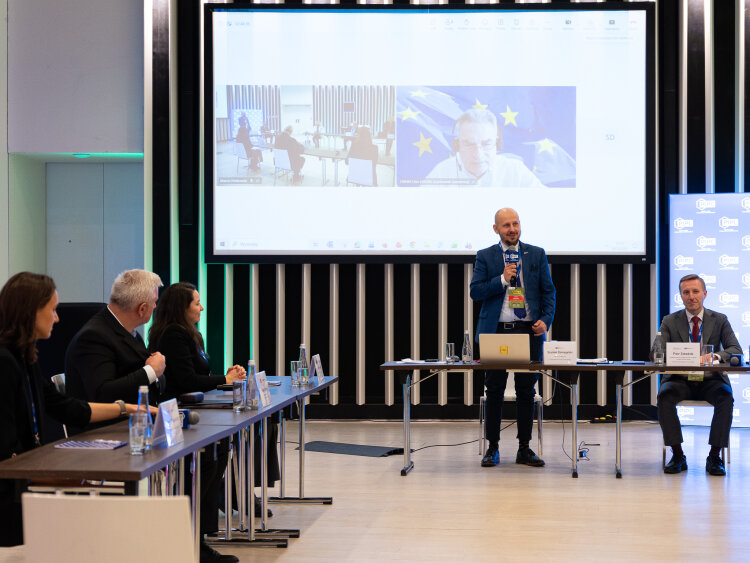
The second day of the 6th Techco Forum began with the briefing “Action plan for the European chemical industry – review of milestones”, delivered by Otto Linher, Senior Expert in the REACH Unit, DG Internal Market, Industry, Entrepreneurship and SMEs at the European Commission. He presented the main assumptions of the action plan for the chemical industry, focusing on five strategic directions: strengthening the sector’s resilience, protecting the European market, ensuring energy supply and decarbonisation, lead markets and innovation, and regulatory simplification.
Linher stressed that the REACH revision must be accompanied by streamlined procedures, as the current authorisation and restriction processes are ineffective and lead to delays, making it difficult both to protect health and the environment and to run businesses. He also pointed to the excessive complexity of supply chain communication and the need to digitalise it.
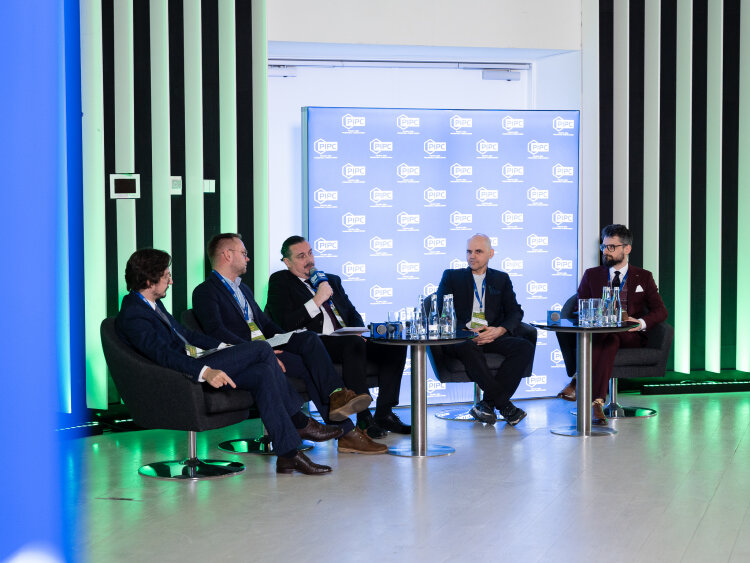
The presentation introduced the roundtable “Sustainable chemistry – between protection, simplification and competitiveness of value chains”, with participants including, among others, Dr Eng. Anna Kozera-Szałkowska, Managing Director of Plastics Europe Polska, Otto Linher from the European Commission, Dr Adrianna Ogonowska from Wardyński & Partners, Dr Eng. Tomasz Olczak from Orlen, Piotr Paluch from Qemetica, Kinga Świerad from Basf Polska, Patrycja Twardochleb from PCC Rokita and Piotr Zabadała from the Ministry of Development and Technology. The moderator was Szymon Domagalski from the Advocacy and Legislation Division of PCCiP.
The discussion highlighted that the pace and scope of regulatory changes are currently not aligned with the needs and investment capacities of industry. A particular concern raised was the lack of a level playing field: EU companies bear high costs of compliance, supplier control and substance monitoring, while operators from outside the EU are not always subject to the same requirements. It was stressed that the REACH revision should preserve the existing level of health and environmental protection while at the same time helping to restore the competitiveness of European chemistry. Among the demands were the need for genuine simplifications, reduced bureaucracy, stable and unambiguous legislation and earlier disclosure of the scientific basis for planned restrictions.
Speakers underlined the importance of proportionality and uniform enforcement of regulations across the EU, as well as the need for coherent rules for chemical recycling and clear mass balance principles. It was noted that protecting the competitiveness of European industry requires partnership-based involvement of the sector and regulators from the early stages of the legislative process.
Read more: