Fast joining of instrument clusters using ultrasonics
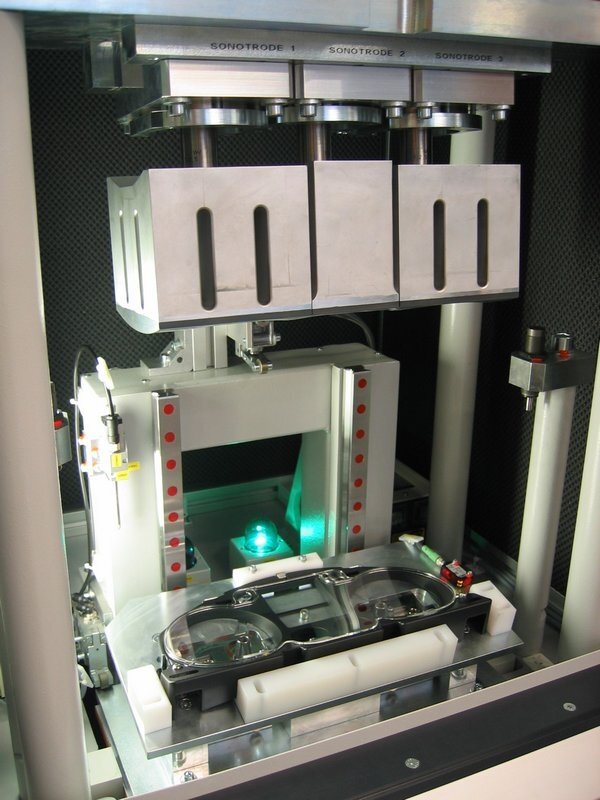
With ultrasonics it is possible to solve a variety of joining tasks for instrument clusters. The weld tasks are just as individual as the design itself: Dust-free welding of cover slips to front frames, gap-free staking of chromium-plated trim rings or distortion-free joining of display plates. Ultrasonic welding is particularly suitable for parts with complex shapes and different weld zone positions. The machine cycle times are often less than 10 seconds.
A car is given its unique "face" by the design of the front section, including front grille, bumper and headlights. A comparable effect is obtained in the interior by the design of the instrument cluster. It gives a vehicle its individual character. The designers' freedom is unlimited. Therefore, it is the developing engineers who must find the ideal weld geometry, be it for welding of a single-part cover slip or several lenses onto the front frame or be it for individual weld-on of several segments.
In comparison with other joining processes, such as vibration and laser welding, the ultrasonic joining technology can score highly. With cycle times of less than 10 seconds it is possible to weld cover slips (made of PMMA and partly equipped with hot-embossed rims) onto support frames accurately and distortion-free. With weld processes of only half a second it is possible to achieve high-strength joints mark-free and lint-free. Energy is focused specifically in the area specifically designed for ultrasonic welding and thus prevents undesired component distortion.
No additional consumables, such as adhesives or screws are required for ultrasonic welding. Specially conditioned plastics are not required, either. In comparison with clipped components, the ultrasonic process ensures creak-free connections and saves costs in terms of sophisticate tool structures. Even for difficult-to-access joining points or component surfaces with 3D contours, it is possible to develop suitable weld tools (sonotrodes) for safe production with the help of FEM calculations (finite element method).
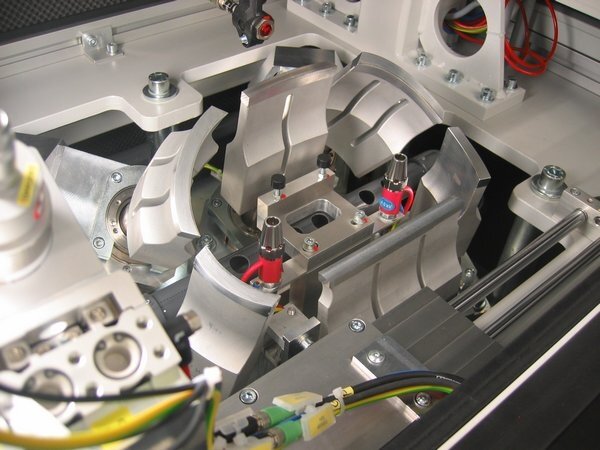
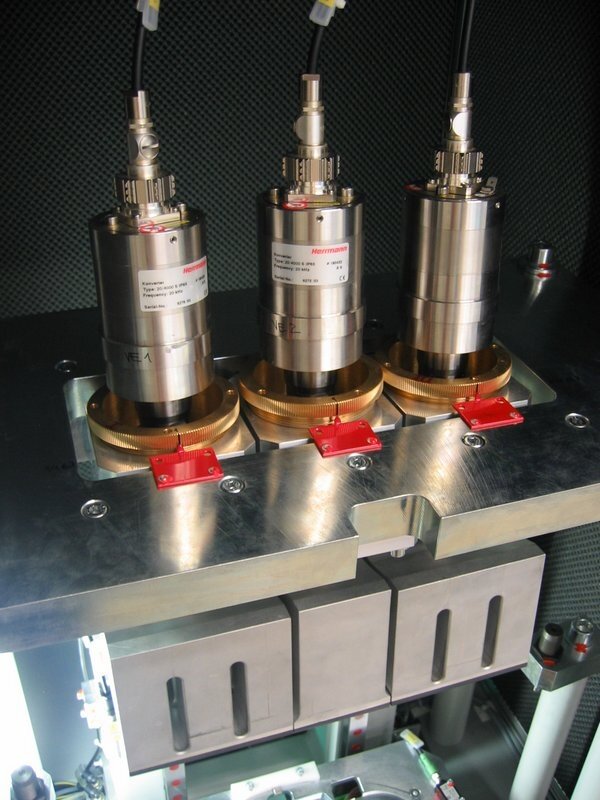
A particular technical feature is the precision adjustment for sonotrodes developed by Herrmann Ultraschall and already used in many applications. This technology, which is particularly used for rigid mounting of the entire 20 kHz ultrasonic stack, ensures precise positioning of the sonotrodes relative to each other at distances of only 0.2 mm and relative to the sometimes complex 3D contours of instrument clusters. Often, the rigid sonotrodes are used as fixtures for the component. In that case, a punch made of casting resin is moved down onto the cover slip carrying out the weld travel. However, rigid mounting of sonotrodes at the top is also possible depending on the insert situation, and the instrument cluster together with the insert equipment is moved towards the sonotrodes from the bottom.
Meanwhile, ultrasonic welding of instrument clusters is no longer limited to cover slips but day-to-day applications also include trim elements, such as chromium rings or complete cover frames and display plates. For these types of applications, ultrasonic staking with 35 kHz is used as a general rule. In contrast to classic ultrasonic welding, i.e. two plastic surfaces are joined, ultrasonic staking involves plastic material that is plasticized and added to the staking point so that it is possible to form the stake head.
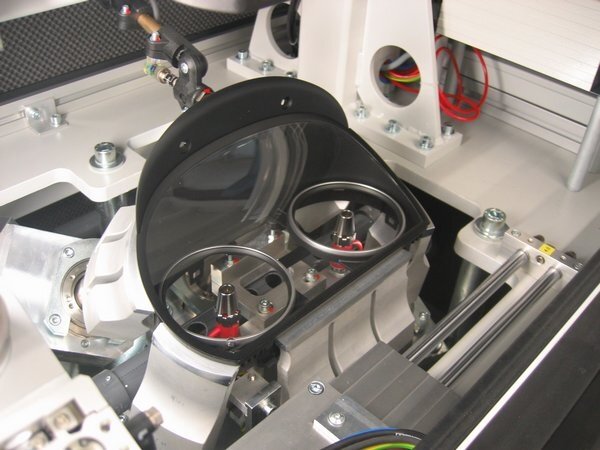
However, to realize impeccable and secure ultrasonic weld joints, the component design must be suitable for ultrasonic processing. It is by no means more complex than for other joining processes but represents a basic requirements for successful welding. Key features of a good ultrasonics supplier is detailed preliminary consulting as well as competent support and customer services during the implementation process.
Please visit us on MSV in Brno form 14. to 18. September 2015 in hall G1, booth 31 and on Fakuma in Friedrichshafen from 13. to 17. October 2015 in hall A4, booth 4108.
More information on website www.herrmannultraschall.com.