FCS to show smart injection molding at TaipeiPlas 2026
Fu Chun Shin will present injection molding systems focused on smart manufacturing and sustainability at TaipeiPlas 2026, including the SA-1000, the largest machine it has exhibited at the show.
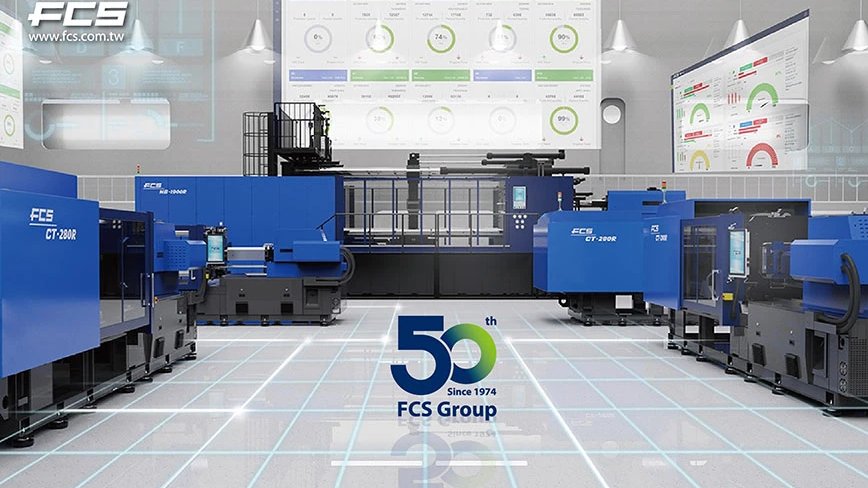
Fu Chun Shin (FCS), a Taiwan-based manufacturer of injection molding machines, will present a range of systems at the Taipei International Plastics & Rubber Industry Show, TaipeiPlas 2026, from September 15 to 19. The company’s participation follows the show theme, "Form to Future", and its three main areas: smart manufacturing, innovative materials and sustainability. FCS plans to demonstrate how its injection molding technology, automation and plant-level data systems can support higher production efficiency, lower carbon manufacturing and more extensive process control. The company will show the largest machine it has ever exhibited at TaipeiPlas and will connect the operating machines at its booth to the iMF 4.0 Intelligent ManuFactory system, presenting an integrated smart factory concept for plastics processing.
The exhibition concept is based on three injection molding systems for different applications. They include a large outward toggle machine for high-output consumer and industrial parts, a smart molding system with AI-based quality prediction and mold temperature control, and an all-electric system intended for low-carbon production and energy monitoring.
SA-1000 flagship molding system
The main exhibit at the booth will be the SA-1000 Large Outward Toggle Injection Molding Machine. According to FCS, the machine has been developed around the principle of "Footprint Reduction, Performance Elevation". The model is designed to reduce the space requirement normally associated with large injection molding equipment while maintaining high clamping force and process stability.
The SA-1000 provides 1,000 tons of clamping force while occupying the footprint of a standard 750-ton machine. FCS states that the overall machine length has been shortened by up to 17% compared with conventional models in the same class. The machine also offers an 18% increase in opening stroke. Its outward toggle mechanism is intended to concentrate clamping force, extend mold life and improve product weight stability by 40%.
The system is equipped with dual linear guide rails to support injection stability and energy efficiency. During the show, the machine will produce woven-pattern plastic stools in a fully automated demonstration. The cell will include a robotic arm for part extraction, with a total cycle time of 50 seconds. FCS positions the system for applications including new energy vehicles and automotive components, premium sports goods, semiconductors and ICT, as well as logistics pallets and deep-bucket containers.
SA-160 smart molding system with AI functions
For the smart manufacturing part of the display, FCS will show the SA-160 Outward Toggle Injection Molding Machine in a fully automated demonstration producing stationery trays. The system will feature two developments from the FCS R&D Center: an AI quality self-monitoring injection molding machine function and a mold water flow and temperature sensing and control system.
The AI quality self-monitoring function is embedded directly in the machine control box for what FCS describes as rapid "Zero-Retrofit Deployment". Using AI virtual metrology, the system predicts product weight and dimensional quality in real time before mold opening, removing the delay associated with post-molding testing. Prediction models can be switched through software, enabling the machine to adapt to different products. FCS identifies this capability as relevant to high-mix, low-volume production.
The mold water flow and temperature sensing and control system operates according to the principle of "Flow Control Before Temp Control". A built-in regulating valve compensates for fluctuations in factory water pressure, maintaining mold temperature within ±2°C. The system also includes non-invasive blockage detection with real-time alerts. Automated purging can be activated with one key, saving 10 to 15 minutes of downtime per mold change and helping prevent mold rusting.
CT-120 all-electric system and energy monitoring
FCS will also present the CT-120 All-Electric Injection Molding Machine as part of a low-carbon molding system developed with the Chung Yuan Christian University (CYCU) Smart Manufacturing R&D Center. The system combines the all-electric machine with automation peripherals and a technology described as "Real-Time Multi-Stage Energy Consumption Statistical and Monitoring Technology".
The development addresses requirements related to carbon and energy management, including EU Product Carbon Footprint (PCF), Digital Product Passport (DPP) and Euromap 60.1 energy efficiency grading. Instead of relying on whole-machine energy estimates, the technology separates the injection molding cycle into stages, including mold opening and closing, plasticizing, injection and holding pressure. Each phase can be measured and monitored in real time.
According to FCS, the system is intended to support simultaneous optimization of molding quality and energy consumption by applying academic algorithms to production conditions. It can also be used to monitor processing stability for post-consumer recycled (PCR) materials by analyzing energy consumption stability in real time. FCS states that this information can help manufacturers reduce defect rates in recycled material applications.
iMF 4.0 as a plant-level manufacturing system
All FCS machines operating at TaipeiPlas 2026 will be connected to the iMF 4.0 Intelligent ManuFactory system. The platform is presented as a smart manufacturing hub for plastics and rubber processing, extending beyond single-machine control to plant-level management.
The system converts shop-floor data into dashboards for monitoring machine status, production progress and Overall Equipment Effectiveness (OEE) across a facility. It also collects and analyzes injection molding parameters, linking quality data with production records to support product traceability and bottleneck identification.
FCS also links iMF 4.0 with ESG-related manufacturing requirements. By continuously collecting and integrating energy consumption data, including through cloud-based functions, the system can map resource use across production stages. This provides a data basis for carbon accounting and green transition planning.
FCS will present the systems at booth J0617 during TaipeiPlas 2026.