Lanxess: remodelling of the company
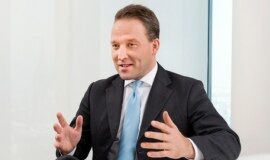
We present an interview with Matthias Zachert, CEO Lanxess AG.
What is the cause of the group's financial difficulties in recent months? What step have the company's new management taken to improve the situation?
Let me start off by saying a few words about Lanxess's success story. The first 10 years were exactly that: the spin-off in 2004 followed by the stock exchange launch in January 2005 and culminating in the admission into the biggest German Stock index (DAX) in 2012. We have established our position in the industry and are now well positioned globally. Today, Lanxess is a company of international renown with employees that stand up for the company.
However, we haven't done enough in the past 10 years to adapt our business model. In this time, our markets and competitors have changed substantially. We now need to respond to this. Under the motto of “Let's Lanxess again” we have therefore established a program to realign ourselves and improve the long-term competitiveness of the company.
Our biggest building site is our rubber business, that much I can say. Here we face overcapacities, new competitors and varying energy frameworks. At the same time, we need to lower our debt and reduce costs.
Are the objectives of the Advance program announced last fall still valid? Has the program been launched yet? Particularly with respect to reducing staff numbers and selling the company's subsidiaries?
The personnel adjustments made under the Advance program have been completed. As part of the program's portfolio measures we sold Perlon Monofil GmbH to the Serafin group in March of this year. We are currently reviewing further strategic options.
It is already clear, however, that the steps we have introduced under Advance will not suffice to adequately arm our company for the difficult times to come. Through our "Let's Lanxess again" drive we want to identify where changes have to be made to safeguard the long-term competitiveness of our company and to implement them in good time.
How long is it going to take the company to become profitable again? When do you think the company will start making profits?
As I said, the past 10 years have been very successful for us. Now, however, the changed market conditions mean that Lanxess is about to undergo a comprehensive realignment. This process is expected to take two to three years.
Which of the group's operating segments do you think will be exposed to the biggest problems in the months to come? Which operating segments is Lanxess going to develop and which is it going to abandon?
Our rubber division is clearly facing the biggest challenges, at the same time however, also the biggest opportunities. So whilst we are confronted with overcapacities here in the next two to three years the underlying mobility trend is very robust. In order to restore profitability we will address our cost structure. The focus on future investments will however largely be in our other two segments, as we have invested substantially in the rubber division in the recent years.
Which of Lanxess's product groups are the most promising today? What new products can we expect in the near future?
We are pleased to say that the products in our portfolio that are based on the agricultural and urbanization megatrends continue to develop positively. The sales volumes in the rubber sector were also firm in the first quarter of 2014, though we continue to face increasing price pressure in this sector and the competitive environment has become more difficult. With the investments we made over the last few years we should be capable to introduce new products in all of our respective operating segments. Also in the rubber division we are currently testing new product developments, which might come to the market in the next few years.
Despite the continuing difficult situation in Europe, Lanxess has invested in a polyamide factory in Belgium. Isn't that project going to destroy the company's finances because of the high costs of labor in Western Europe?
Lanxess has invested EUR 75 million in the polyamide plant in Antwerp, Belgium. High-tech plastics play a key role in sustainable mobility as auto manufacturers are using more lightweight materials in order to meet tougher CO2 emission standards. Although costs such as labor are higher in Western Europe, Lanxess is able to remain competitive in this field because it is a frontrunner in the technology for lightweight plastics. This technological advantage over the competition helps to compensate for the higher cost base. At the same time, Antwerp is a key plastics site for Lanxess, where it also produces the key raw materials to make such lightweight materials. This backward integration into the value chain also gives the company a distinct cost advantage.
The group has also made investments in Asia and Brazil recently. What is it that is attracting investors to Brazil, where the Polish company Synthos, for example, wants to invest too? Which of the two markets will be more important over the next few years?
Brazil is a country with a large population. The middle-class there is growing in size and wants to become more mobile, thus driving demand for tires and cars. We have expanded in existing plants and built new ones there in recent years in order to serve our customer base with lightweight plastics and high-performance rubbers that go into fuel-efficient tires. Given the growing population and burgeoning middle class in Asia, it remains our expectation that demand for products – particularly for the megatrends of mobility and urbanization – will also increase here. Both regions will remain vital for our business operations in the future.
Do you think that the low prices of raw materials in the United States make the country the Promised Land for the chemical industry? What are the countries that chemical companies should look at when planning their investment projects?
Lanxess has been keeping a close watch on the generation of energy and extraction of raw materials by fracking and on the debate in the various countries. For us, constructive and rational dialog on the opportunities and risks is essential.
Therefore, in our view it does make sense to analyze also in Europe the possibility of using shale gas. If the results of these investigations show that safe and environmentally friendly recovery of shale gas is possible in Europe, we would also support the extraction of these gas reserves by fracking, if it makes economically sense. We see the recovery of homegrown shale gas as a chance to safeguard the industry's raw material and energy supply.
For an energy-dependent sector such as the chemical industry, it is extremely important to remain globally competitive and thus safeguard jobs over the long term. Among other factors it is from our perspective a locational advantage if the local energy supply is clean and safe and at the same time provided at competitive conditions.
Given the present geopolitical conditions, is Lanxess going to expand its presence in Russia?
Since 2009, Lanxess has steered its business in Russia and the Commonwealth of Independent States (CIS) through its own subsidiary, OOO Lanxess, based in Moscow. Some 30 employees here market Lanxess's product portfolio. The target markets include the automotive and tire industries and the construction sector. In Lipetsk, our subsidiary Rhein Chemie manufactures polymer-bound rubber additives, mainly for the automotive and tire industries. A production facility for bladders used in tire production is to be added in 2016. We currently employ 12 people in Lipetsk. We posted sales of about EUR 76 million in Russia in 2013.
Given the current conflict we are convinced that the dialogue with Russia should be maintained at all levels. Our business with Russia is not directly affected by the sanctions that have been imposed so far. However, we are keeping a close eye on the situation and how the conflict is developing.
What role do Poland and other CEE play in the company's development plans?
Within Central and Eastern Europe, Poland is the most important market for us. In Poland Lanxess achieved sales of EUR 96 million in 2013. The main customer areas were tire and automotive. In the entire region of Central Eastern Europe we had sales of more than EUR 300 million in 2013. For the coming years we expect growth rates in CEE above those in Western European markets.