High output from a minimal footprint: the Engel e-mac for medical applications
Engel will present an automated e-mac 200 cell producing PP auto-injector components at Fakuma 2026. The exhibit combines a 32-cavity mould, process assistance systems and cleanroom-compatible production in a compact footprint.
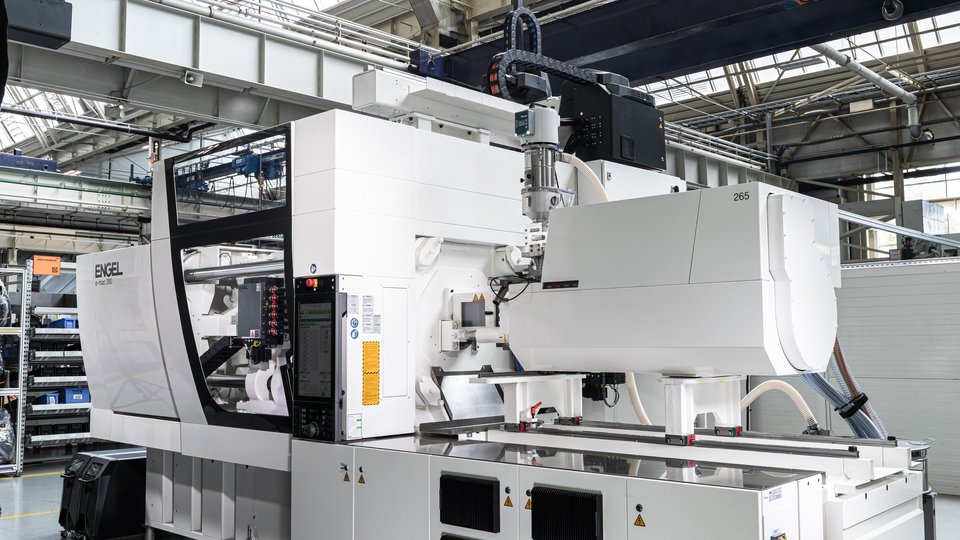
Engel will demonstrate series production of medical auto-injector components on an all-electric e-mac 200 injection moulding machine at Fakuma 2026. Designed for applications where millions of parts must be produced with minimal rejects, the cell combines a compact footprint with automated process monitoring and control. This is particularly relevant to cleanroom manufacturing, where floor space represents a significant cost factor. Assistance systems from the inject AI family compensate for process fluctuations before they lead to rejects and can reduce the required clamping force by up to 33 per cent.
The e-mac 200 used in the exhibit has a clamping force of 2,000 kN and tie-bar spacing designed to accommodate sophisticated moulds. Its dynamic injection unit supports repeatable processing at very low shot weights. Options developed specifically for medical applications, together with an enclosed toggle mechanism, support cleanroom-compatible operation. The machine will process a PP random copolymer with white masterbatch to produce a component for a medical auto-injector.
Parts weighing 0.396 grams from a 32-cavity mould
The 32-cavity mould produces individual parts weighing 0.396 grams in a cycle time of less than ten seconds. Engel's iQ weight control adjusts the injection volume in real time. It compensates for fluctuations in melt viscosity within the same shot to maintain consistent part quality.
The Engel validation assistant uses information from the iQ assistance systems to evaluate a robust process window rather than only one operating point. The resulting assessment indicates process stability within defined limits, with the aim of reducing validation work and accelerating approval for series production. Regulatory qualification and validation procedures remain unchanged. The assistant supplements them with a transparent, data-based and digitally supported process assessment.
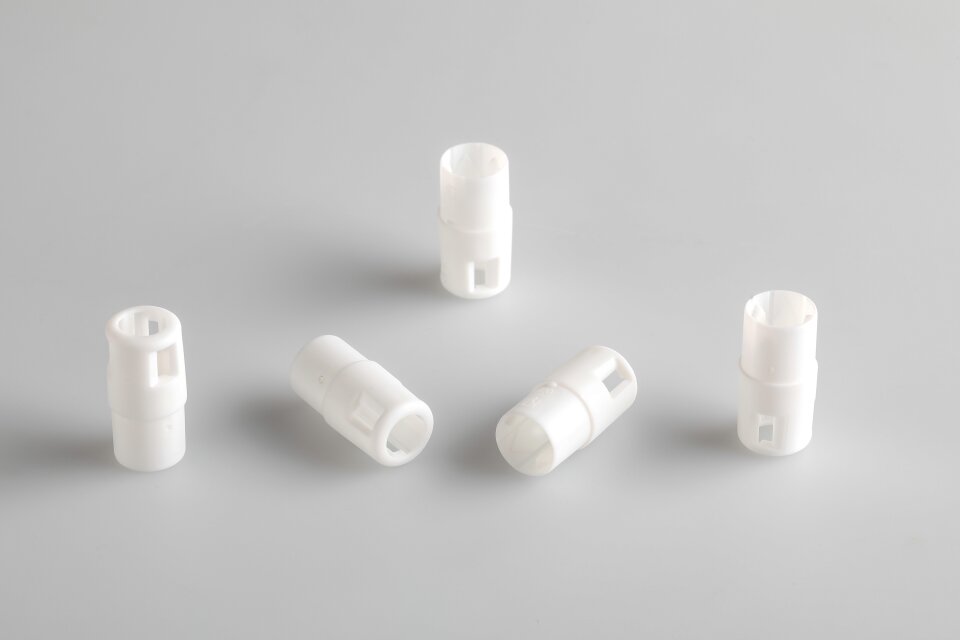
Auto-injector component, precision-manufactured in volumes of millions on the Engel e-mac
Process assistance functions
Four functions from the inject AI family are used to stabilise production and support operators:
- iQ clamp control automatically regulates clamping force and can reduce it by up to 33 per cent. This lowers energy consumption while protecting the mould and extending its service life.
- iQ flow control maintains stable mould temperature control by adjusting pump speed. According to Engel, this provides consistent thermal conditions, reduces rejects and cuts energy consumption by up to 18 per cent, affecting both operating costs and the carbon footprint.
- Parameter Limits prevents settings outside the approved process window, reducing the risk of operator errors, including after personnel changes.
- iQ process observer uses artificial intelligence to analyse more than 1,000 process parameters, detect deviations at an early stage and provide recommendations for corrective action.
Mechanical demoulding for 32 cavities
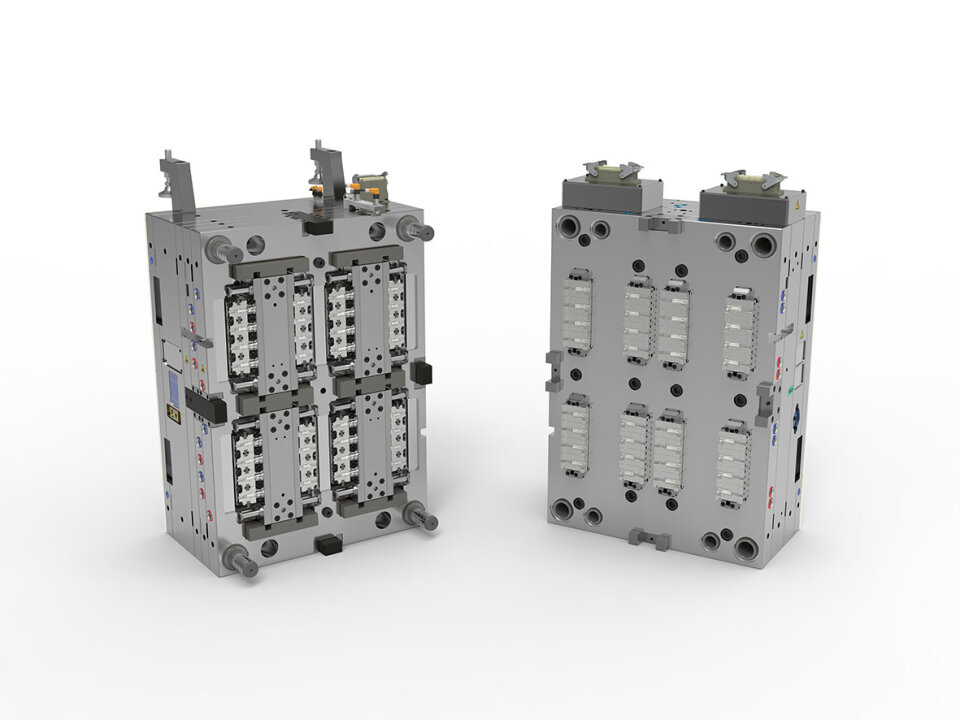
Braunform GmbH supplied the mould for the project. The company specialises in high-precision multi-component, multi-cavity and stack moulds, including systems for medical and pharmaceutical applications. Its Lift&Strip² system simultaneously lifts the component and strips it from the mould in a synchronised sequence. The fully mechanical horizontal demoulding system requires no additional drives and supports direct gating with valve-gate technology.
Different speed profiles enable gentle demoulding of thin-walled parts and components with complex geometries. A mechanically coupled ejector stage actuates two miniature slides, allowing a compact configuration. The design can be scaled from eight to 32 cavities while retaining the same process logic, supporting the transition from pilot production to series manufacturing.
Two demoulding steps in one synchronised mould movement: Braunform's Lift&Strip² system lifts the component and strips it from the mould at the same time. Its compact design enables efficient production with 32 cavities
Automated compact cell
An Engel viper linear robot removes the moulded components. Together with the Engel compact cell and its integrated box transfer system, it creates an automated, space-saving production unit. The transfer system includes a reject position and a drawer for good parts. A tray transfer system is also available as an alternative.
The compact cell can be moved aside to provide unrestricted access to the mould area. The injection moulding machine and automation use a common control system and consistent data set. iQ motion control automatically synchronises robot movements with the machine cycle, reducing cycle time and energy consumption.
Exhibit presented with Billion
The production cell will be displayed at the stand of French injection moulding machine manufacturer Billion SAS, marking the companies' strategic partnership in the medical segment. Billion will focus on servicing its installed machine base, while Engel will become the recommended supplier of new injection moulding machines. The companies intend to offer customers complementary machine technologies and a coordinated portfolio.
The demonstration will take place at Fakuma 2026 in Hall B3, Stand 3104.