NIAS compliance reshapes polymer packaging controls
EU Regulation 2025/351 will introduce stricter NIAS control obligations from September 2026. Packaging supply chains will need stronger analytical methods, substance traceability and testing across compounding and conversion stages.
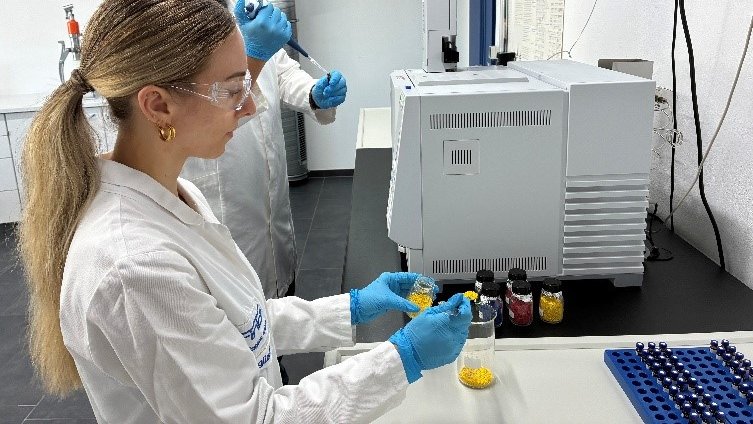
The European food-contact and cosmetic packaging sectors are approaching a fundamental change in the control of Non-Intentionally Added Substances (NIAS). From September 2026, updated EU Regulation 2025/351 will impose significantly stricter obligations concerning NIAS in packaging materials. Standard analytical testing based on automatic data evaluation and generic supplier declarations may no longer provide sufficient information to identify and assess migrating substances.
Historically, responsibility for demonstrating that packaging was virtually free from harmful migrating substances rested primarily with the manufacturer of the final article. Under the new framework, every participant in the value chain, from raw material suppliers through masterbatch producers to final converters, will have to declare Intentionally Added Substances (IAS) and scientifically evaluate potential NIAS.
New chemical substances may form during the manufacture of colorants and additives, as well as during downstream processing such as masterbatch production. These substances must be anticipated, identified and characterized. Companies throughout the supply chain will therefore need advanced in-house analytical capabilities or access to specialized external laboratories able to perform detailed characterization.
Limitations of automated analytical evaluation
Converters and packaging brands have commonly commissioned accredited external laboratories to conduct routine NIAS screening. Although these institutes have advanced equipment, their methods may not fully address the chemical complexity of polymer compounding.
External testing frequently relies on automated evaluation of data generated by Gas Chromatography-Mass Spectrometry (GC-MS). Mass spectra are compared with reference libraries. Software identifies the largest chromatographic peaks and cross-references their spectra against data held in existing databases.
This approach can overlook small but diagnostically important mass spectral peaks. Such peaks result from fragment ions that may be essential for correct substance identification, but algorithms can neglect or misinterpret them.
Comparative tests on injection-moulded HDPE plates containing colour masterbatches showed that accredited institutes reported the expected benign n-alkanes, which occur in standard HDPE, but provided no or very little actionable information about potentially hazardous target compounds attributable to the masterbatches.
External institutes also conduct tests without detailed knowledge of proprietary masterbatch formulations and often lack physical access to the specific raw materials used in compounding. Without this baseline information, tracing the source of a chemical anomaly identified as NIAS is difficult.
Manual analysis and access to raw materials
Closing the gap between automated data evaluation and reliable chemical identification requires expert assessment. Finke Colors, a German supplier of additive and colour masterbatches for food and cosmetic packaging, has experience with this analytical challenge. Dr. Lothar Wodniok, a senior chemist who now owns DOC-WOK Analytics and has more than three decades of experience in polymer science, analytical science and formulation work at Finke Colors, said:
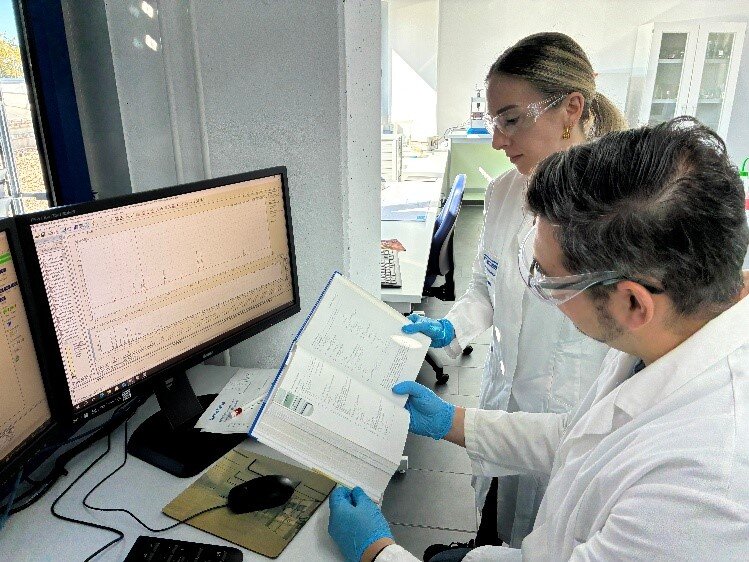
"Manual evaluation of the chemical structure is a necessity. A single masterbatch chromatogram can yield over 100 distinct peaks. While a software library might, for instance, automatically identify 40 of them, the remaining unidentified peaks require painstaking manual analysis. By leveraging a deep understanding of formulation chemistry, we look at molecular fragmentation patterns in the mass spectra to deduce a substance's structure. In addition, a counter-check of the results of automatic identification has shown to be absolutely necessary."
A masterbatch producer has direct access to the raw materials used in its formulations and can test them to locate the source of NIAS. Dr. Wodniok described an analysis of a standard antistatic additive masterbatch for which the supplier had provided no information about potential NIAS:
"For instance, when we analyzed a standard antistatic additive masterbatch, the supplier provided no information regarding potential NIAS. Through our detailed GC-MS data evaluation, we uncovered about 40 distinct migrating substances. Because of our chemical approach, we were able to trace these compounds directly back to the starting raw materials, side products, and intermediate reaction steps involved in synthesizing that additive."
The findings indicate that most NIAS are introduced through raw materials, although additional NIAS can form from additives during masterbatch production. Parameters such as extruder speed and residence time often have less influence on the NIAS profile than variations in materials supplied by raw material producers.
One-time testing is therefore insufficient. Different batches from the same manufacturer can produce substantially different results, while a change in a pigment or dispersion agent batch can significantly modify the chromatogram. In-house NIAS screening can consequently serve as a quality assurance method for monitoring raw material consistency, in addition to supporting regulatory compliance.
NIAS generated during compounding and conversion
Processing conditions can directly generate NIAS. Characterizing their influence makes it possible to define a "safe operating window" intended to limit the formation of unwanted substances.
- Masterbatch production: High concentrations and extreme shear forces make this the most critical environment for NIAS formation.
- Injection moulding: This is considered the second most critical stage because of its specific high-temperature and high-pressure profiles.
- Blow moulding and cast extrusion: These processes are generally less critical than injection moulding, but they still impose distinct thermal stresses that require evaluation.
NIAS testing should consequently cover both initial compounding and subsequent conversion stages. A masterbatch producer with laboratory facilities capable of simulating final packaging production can test injection-moulded plates or blow-moulded bottles. According to the source, Finke has such in-house capabilities, enabling it to assess the material through multiple stages of its processing lifecycle.
Interactions in cosmetic packaging
Precise NIAS assessment is particularly relevant to cosmetic packaging because active ingredients may interact with packaging materials over long storage periods. One example is the interaction between BHT, an antioxidant used in cosmetic formulations, and titanium dioxide (TiO2) in white LDPE packaging. The reaction can cause the packaging to turn yellow. Identification of such interactions can help determine which pigments are suitable for specific reactive formulations.
Variability of post-consumer recyclates
The use of post-consumer recycled (PCR) materials introduces an additional analytical challenge. Variability and inherent contamination within PCR streams are expected to increase the occurrence of NIAS.
As the September 2026 deadline approaches, the required frequency of testing remains under discussion in the industry. Testing may be prompted by formulation updates, changes in raw material suppliers or the introduction of PCR. Generic supplier declarations alone will not provide an adequate legal or operational basis. Compliance will require substance identification beyond automated library matching, combined with an understanding of chemistry across the complete value chain.
Read more: